Our resource library is made available freely to all in order to advance responsible supply chain practices. Here you will find information and guidance on responsible supply chain issues and the way that the PSCI works. If you have any suggestions for improvements or additions to our resources please contact us.
Today the PSCI published its 2021 Annual Report, summarizing a year of exceptional advancement towards achieving our shared vision of excellence in safety, environmental, and social outcomes across the global pharmaceutical and healthcare supply chain.
Key developments in 2021 include:
Growth in membership, with 53 member companies adopting the PSCI Principles
Increased audit sharing, with 116 new audits uploaded to our bespoke audit sharing platform
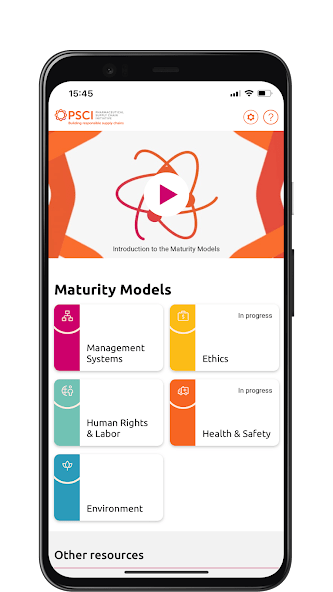
Finalization of our master supplier learning curriculum, with the launch of our eight maturity models for suppliers to use to advance their practices
Unprecedented levels of supplier engagement through two large-scale Virtual Supplier Conferences in China and India, reaching 2,000+ attendees
Promising insights on our impact on the industry, with preliminary analysis on audit data showing that our influence supports positive change on supplier practices
Manjit Singh, 2021 PSCI Chair and Associate Director of Corporate Sustainability at Centrient Pharmaceuticals says,
2021 was a year of spectacular growth for the PSCI in membership and activity. Despite the second year of the Covid-19 pandemic, every aspect of the PSCI's program developed and grew from our shared audits to our supplier capability interactions. I have appreciated the professional and energetic contribution of my fellow PSCI members and watched with great pride the growth of the organization and the impact it has upon our entire industry.
You can read about these advancements and more in the report below.
We welcome comments and encourage you to share this report with your networks using the hashtag #PSCIAnnualReport.
The PSCI is pleased to continue supporting the work of the Telangana State Government in India to revitalize the Musi River.
The Musi River flows through Hyderabad in Telangana State, Southern India. It is fed by the world-heritage Hussein Sagar lake, also called the “heart of the world”, and used to be enjoyed by locals and tourists alike for its beauty and amenity. Yet, there have been numerous reports of polluted effluents and poor wastewater management practices affecting the lake and the Musi River watershed, impacting local communities over many years.
For World Water Day 2021 (22 March), we published a statement outlining our support for the State government's initiative and our plans to help. We aimed to use our influence to engage with suppliers of PSCI members in Telangana to promote better wastewater practices and encourage positive change. Our aim is that every single supplier with a connection to a PSCI member should be visited, audited or contacted directly to promote the best technologies for wastewater management.
One year later, we're pleased to share an update on progress made. Since March 2021, we have
Held dedicated sessions on wastewater treatment technology at our Virtual Supplier Conference in India
Created a baseline of all pharmaceutical companies in the Musi River catchment area to identify connections with PSCI member companies
Our aim is that all suppliers to PSCI members should provide information about their wastewater treatment practices, either via member visit, questionnaire, or a full site audit shared on our platform.
To continue this work, we will
encourage suppliers to share audits and work with our members to encourage site visits or audits
offer audits free of charge to suppliers in the Musi River catchment area
promote our PEC:PNEC calculator for assessing API discharges
We hope to contribute to restoring the Musi River to its former health.
The Audit Committee has recently conducted a light refresh on the SAQ/Audit Excel template, and the Audit Guidance document. The new versions are now available on the Link.
This webinar covered the following topics:
Updates to the SAQ/Audit templates
Updates to the Audit Guidance documents
Latest news from Audit Committee, including plan to move the SAQ online
At the PSCI, we’re committed to supporting all our members to implement the United Nations’ Guiding Principles on Business and Human Rights (UNGPs) as part of our mission to drive excellence in safety, environmental, and social outcomes across the pharmaceutical and healthcare supply chain.
That’s why for Human Rights Day (10 December), we’re excited to launch our new Position Statement, which provides an overview of the role we play in helping our members and suppliers align their practices with the UNGPs through the PSCI Principles for Responsible Supply Chain Management and our resources.
With our training materials, webinars, and tools we aim not only to ensure the upholding of our Principles, but also to support all our members in implementing the UNGPs across their entire supply chains.
EXCEL VERSION
PSCI Self Assessment Questionnaire and Audit Report Template for Core Suppliers, External Manufacturers, Component and Material Suppliers
For optimum functionality, we recommend using the most up to date version Microsoft Excel. If you only have access to Excel 2003 or earlier, we recommend using the Word version of the SAQ.
Content Version 6, February 2019
Content Version 7, remote audit options added, October 2020
Content version 7.1, small technical fixes, including correctly referencing finding type on CAP tab, showing suppliers responses to topic areas that are not audited, May 2021
Content version 7.2, fix formating issue of finding classifications on the Company Specific Questions tab, June 2021
Content version 8.0, simplified the Categorisation of Suppliers (Category A, B or C), removed/ added a few questions, rewording some questions, December 2021 Content version 9.0, full review and update of the SAQ. Section names and all questions revised to reflect the updated PSCI Principles, September 2024.
Abbreviated version template for Service Providers & General Manufacturers are also available: Excel version.
The SAQ is currently available in the following languages:
EXCEL VERSION
Abbreviated PSCI Self Assessment Questionnaire & Audit Report Template for Service Providers & General Manufacturers
For optimum functionality, we recommend using the most up to date version Microsoft Excel. If you only have access to Excel 2003 or earlier, we recommend using the Word version of the SAQ.
Content Version 6, February 2019
Content Version 7, remote audit options added, October 2020
Content version 7.1, small technical fixes, May 2021
Content version 7.2, fix formating issue of finding classifications on the Company Specific Questions tab, June 2021
Content version 8.0, simplified the Categorisation of Suppliers (Category A, B or C), removed/ added a few questions, rewording some questions, December 2021 Content version 9.0, full review and update of the SAQ. Section names and all questions revised to reflect the updated PSCI Principles, December 2024.
Full version template for Core Suppliers, External Manufacturers, Component and Material Suppliers are also available and come in multiple languages: Excel version.
We are very pleased to announce that the 2020 PSCI Annual Report was launched today, summarizing the progress and achievements we have made in advancing responsible supply chain practices within the pharmaceutical and healthcare industries over the past year.
Key developments in 2020 include:
Growth in membership, with over 45 member companies now committed to the initiative and having adopted the PSCI Principles
A new three-year strategy adopted to deliver our refreshed vision for excellence in safety, environmental, and social outcomes across the whole of the global pharmaceutical and healthcare supply chain
Pioneering remote audit standards aligned with the PSCI Principles, now available to members on our community platform The Link, alongside valuable resources, news, and training materials
Strengthened partnerships with our Indian and Chinese partners, recognizing the importance of those countries for the pharmaceutical supply chain
Unprecedented levels of supplier engagement through two large-scale virtual supplier conferences in China and India, reaching 700+ supplier delegates
Expansion of our Board to support the delivery of our ambitious strategy
Measured improvement in PSCI member companies’ contribution to and use of PSCI resources to address supply chain issues.
2020 was an extraordinary year, full of large-scale professional challenges for our industry and its supply chain, not to mention the personal challenges we all faced in our own lives. We are proud of the way the PSCI adjusted to these challenges, showing remarkable agility. It is clear that the importance of responsible supply chain practices cannot be overstated and we are pleased to be able to drive positive change across the industry through our collaborative efforts.
We welcome comments and encourage you to share this report with your networks.
Our April newsletter reflects recent activities including our support to the Musi River Revitalization Initiative, the publication of our Benchmarking Survey Insights Report, and our outreach campaign on the vital issue of anti-microbial resistance. It also highlights our upcoming plans and events, such as our Virtual Spring Meeting, and external developments relevant to pharmaceutical supply chains.
At the PSCI, we’re committed to doing everything in our power to limit that the spread and growth of two emerging threats – Pharmaceuticals in the Environment (PiE) and Anti-microbial Resistance (AMR). That’s why for World Health Day, we’re excited today to launch our new Position Statement, which provides a clear explanation of the critical role we play in helping our supplier partners improve their manufacturing practices. The statement has been written to highlight the relevance of the PiE issue along the supply chain, to articulate the PSCI's position on this high profile topic, and to help answer stakeholder inquiries. It includes an overview of all PSCI resources on PiE and AMR-related issues.
Supplier Self-initiated Audit Programme (SSIA) is a pilot programme led by PSCI Audit Committee to encourage suppliers to take a proactive, risk-based approach and self-initiate PSCI audits for their facilities.
With the pilot programme this year, the PSCI will pay for a new Supplier Self-initiated Audit of the supplier facility. The audit should be completed by a PSCI approved audit firm and shared with PSCI members on the Link. Any supplier to PSCI Member can apply to participate in SSIA.
This document for suppliers explains:
What is SSIA and the benefits
Who can participate and the requirements
How to conduct a SSIA
Members are welcome to share the brochure with suppliers you would like to see conducting a PSCI audit.
If you are interested in learning more about the programme, please contact Audit Committee Secretariat Blake Zheng for more information. Thank you.
This document provides a guidance for auditors to classify Critical-Major-Minor findings under all five PSCI principles. It is for guidance only and each organization can have its own interpretations.
It is intended to be a living document, which will be reviewed and updated regularly by SAQ/Audit and Audit Guidance sub team.
This document was updated in June 2024 to align with the updated PSCI Principles. For each principle, the examples have been updated and reviewed by a working group formed from the SAQ/Audit and Audit Guidance sub-team. The updated document now also includes complete examples for the minor classification findings.
Stormwater management and Zero Liquid Discharge key points Daniel Rehm, HSE Advisor, External Manufacturing EMEA & API, Elanco
Introduction to PiE and AMR Dr Paul Barnett, Director, Environment Health & Safety, GlaxoSmithKline
Assessing Antibiotic Manufacturing Sites Capability in Controlling their Antibiotic Emissions Jonathan Stanway, Downstream & Pilot Plant Manager, Biotechnology & Environmental Shared Service, Pharma Supply Chain, GlaxoSmithKline
This session was facilitated by Maggie Zhang, Partner Manager at Carnstone.
The recording of the session is available here. Chinese users can download the recording here (password: PSCI).
Slides are available for download below.
The third session of the 2020 PSCI Auditor Training (Virtual) took place virtually on 2 December and covered below presentations.
Process safety risk – Identifying reactive hazards and powder processing hazard in pharmaceutical industry Kumarkrishna Bhattacharjee, Head HS&E Supplier Assurance and Risk India Region, Novartis
This session was facilitated by Lei Sun, Partner at Carnstone.
The recording of the session is available here. Chinese users can download the recording here (password: PSCI).
Slides are available for download below.
Corporate Responsibility with a Social Compliance Audits Dinesh Subhedar, Group Third Party Risk Management -Labour Rights (India and West Asia), Novartis (NBS Human Resources)
This session was facilitated by Maggie Zhang, Partner Manager at Carnstone.
The recording of the session is available here. Chinese users can download the recording here (password: PSCI).
The PSCI supports the efforts of the State of Telangana to reduce pollution of the Musi River, specifically in the immediate vicinity of the two drainage canals that flow into the world-heritage Hussain Sagar lake where a number of PSCI member suppliers’ operations are situated. Please find our full statement below.
Our winter newsletter reflects recent activities including our Annual General Meeting, supplier conferences, and webinars. It also highlights our upcoming plans, and external developments relevant to pharmaceutical supply chains.
The PSCI has recently published its Summer newsletter, reflecting on achievements in the first half of 2020 and looking ahead at a busy programme of exciting events and projects for the rest of the year.
Download the newsletter below to read about our efforts to digitalize our offer to suppliers, our position on important issues such as PiE/AMR, and the partnerships we’re forming with Indian and Chinese organizations. You’ll also find updates on PSCI audit findings from the past three years, our take on emerging issues in supply chains – and more!
This webinar first aired on 27 May and explained the updates and changes to the Audit Guidance document. We were delighted to be joined by the following speaker:
Birgit Skuballa, from Bayer
The webinar attracted over 100 registrants and around 90 people joined on the day.
Participants are invited to share feedback about this webinar here.
MS Word version
PSCI Self Assessment Questionnaire and Audit Report Template for Core Suppliers, External Manufacturers, Component and Material Suppliers
More Info…
Update History
Version 5, February 2019
Chinese translation added July 2019.
Japanese translation added April 2020. Remote audit options added November 2020.
Since 20 April 2022, the Word versions of the templates (Full, Abbreviated, CAPR) have been removed completely following a consultation process and notice period. Access to these is only be possible in exceptional circumstances and by contacting the PSCI Secretariat. Please use the Excel versions: Full, Abbreviated, CAPR
This document can be used by suppliers to document agreed corrective actions, the type of finding(e.g. Critical-Other, Critical-Major/Minor), the time period for completion, the type of verification (e.g. desk top review of documents or follow up visit), the responsible individual at the supplier for the individual corrective actions, details on the implemented corrective action and a status assignment (open/closed).
Since 20 April 2022, the Word versions of the templates (Full, Abbreviated, CAPR) have been removed completely following a consultation process and notice period. Access to these is only be possible in exceptional circumstances and by contacting the PSCI Secretariat. Please use the Excel versions: Full, Abbreviated, CAPR
This document can be used by suppliers to document agreed corrective actions, the type of finding(e.g. Critical/Major/Minor), the time period for completion, the type of verification (e.g. desk top review of documents or follow up visit), the responsible individual at the supplier for the individual corrective actions, details on the implemented corrective action and a status assignment (open/closed).
Content version v4.0, March 2020 Content version v5.0, December 2021
Our latest newsletter, accessible at the link below, reflects recent activities including our Annual General Meeting, supplier conferences and webinars. It also highlights our upcoming plans, and external developments relevant to pharmaceutical supply chains.
WORD VERSION
Abbreviated PSCI Self Assessment Questionnaire & Audit Report Template for Service Providers & General Manufacturers
Version 5, February 2019 Version 6, remote audit options added, October 2020
Since 20 April 2022, the Word versions of the templates (Full, Abbreviated, CAPR) have been removed completely following a consultation process and notice period. Access to these is only be possible in exceptional circumstances and by contacting the PSCI Secretariat. Please use the Excel versions: Full, Abbreviated, CAPR
This document is designed to be used by PSCI members, audit contractors and suppliers. It provides a detailed overview of the audit process and corresponding roles and responsibilities at each stage of the process.
Version 8, November 2025
Updated to align with the updated PSCI Principles and Strategy, inclusion of the digital Data Sharing via the PSCI Audit Platform, updated audit uploading requirements for full members, introduced online SAQ and removed reference of word version template, referenced the Audit Checklist as a separate resource in Chapter 10 and added section on Managing Audit Related Issues in the appendix.
Slides from the PSCI Audit Programme Webinar, Oct 2017
The webinar explained the supplier self-initiated audit model and launched the new Excel based audit templates.
This Excel template is designed to help PSCI members, suppliers and audit firms check auditors against the PSCI's requirements, to ensure that they have the expertise needed to conduct PSCI audits. It is also used by new audit firms in their application process to demonstrate their capacity.
This evaluation tool is also known as PSCI Auditor Information Template (HSE & Social Auditors).