This resource was published on 9 October 2020
This presentation introducing Pharmaron’s work arrangement, prevention and control organization, and normalized control in the fight against COVID-19 was delivered by:
此演讲由下列嘉宾分享康龙化成的新冠疫情防控经验:
- Liuqian Ni, EHS Specialist, Pharmaron | 倪柳倩, 环境健康安全专员, 康龙化成(北京)
This session was facilitated by Maggie Zhang, Partner Manager at Carnstone.
本环节由凯嵘管理咨询合伙人经理张缤莉主持。
The recording is available here (code: PSCI). The slides are available for download below.
会议视频请点击此链接获取(提取码:PSCI) 。会议PPT请在下方点击“DOWNLOAD”下载。
This resource was published on 9 October 2020
This presentation sharing the key points from China’s “Measures for Environmental Management Registration of New Chemical Substances” was delivered by:
此演讲由下列嘉宾介绍中国新化学物质环境管理办法的最新进展:
- Lingzhen Dong, Asia Pacific Region -Product Stewardship Director, Johnson & Johnson | 董玲珍,亚太区EHS&S产品监管总监,强生(中国)
This session was facilitated by Maggie Zhang, Partner Manager at Carnstone.
本环节由凯嵘管理咨询合伙人经理张缤莉主持。
The recording is available here (code: PSCI). The slides are available for download below.
会议视频请点击此链接 获取 (提取码:PSCI) 获取会议视频。会议PPT请在下方点击“DOWNLOAD”下载。
-
Management Systems
-
Chemical Registrations
This resource was published on 9 October 2020
This presentation on PSCI Management System Maturity Model was delivered by:
此演讲由下列嘉宾分享PSCI 管理系统成熟度模型:
- Kelley Jiang, Head HSE Supplier Assurance & Risk – China Region, Novartis | 江戎, 大中国区供应商健康安全环境风险管理主管, 诺华
This session was facilitated by Maggie Zhang, Partner Manager at Carnstone.
本环节由凯嵘管理咨询合伙人经理张缤莉主持。
The recording is available here (code: PSCI). The slides are available for download below.
会议视频请点击此链接获取 (提取码:PSCI) 。会议PPT请在下方点击“DOWNLOAD”下载。
This resource was published on 5 October 2020
The primary focus of this document is to provide a consistent guidance for pharmaceutical companies to calculate GHG emissions in their upstream and downstream value chains. It provides methodologies consistent with recommendations from the GHG Protocol for calculating emissions which are tailored for each different category.
This document was developed by the Pharmaceutical Environment Group (PEG) and its participating companies, who have kindly shared it with the PSCI for diffusion.
-
Environment
-
Decarbonization
This resource was published on 2 October 2020
This presentation on the future of online learning was delivered by:
- Professor Diana Laurillard, Professor of Learning with Digital Technologies, UCL Institute of Education
This session was facilitated by Simon Hodgson, Managing Partner at Carnstone.
The recording is available here. The slides are available for download below.
This resource was published on 2 October 2020
This presentation on PSCI Management System Maturity Model was delivered by:
- Roberta Haski, HSE, External Manufacturing, Asia Pacific, Elanco
This session was facilitated by Simon Hodgson, Managing Partner at Carnstone.
The recording is available here. The slides are available for download below.
This resource was published on 2 October 2020
This presentation on Indian Case Study on Controlling API Releases Including Wastewater Treatment/Analysis was delivered by:
- Jon Peers, Director of Environment, Teva
This session was facilitated by Annabel Buchan, Partner Manager at Carnstone.
The recording is available here. The slides are available for download below.
-
Environment
-
Pharmaceuticals In The Environment
-
Anti-Microbial Resistance
This resource was published on 2 October 2020
This introduction to sampling and analysing APIs in wastewater was delivered by:
- Jon Stanway, Biotechnology & Environmental Downstream Manager, GSK
This session was facilitated by Annabel Buchan, Partner Manager at Carnstone.
The recording is available here. The slides are available for download below.
-
Environment
-
Pharmaceuticals In The Environment
-
Anti-Microbial Resistance
This resource was published on 2 October 2020
This presentation on Draft Indian Wastewater Standards - Current Status and Possible Ramifications for Indian companies was delivered by:
- Mugundan Ramachandran, Senior Consultant, ERM India Private Limited
- Shivananda Shetty, Partner & Commercial Director, ERM India Private Limited
This session was facilitated by Annabel Buchan, Partner Manager at Carnstone.
The recording is available here. The slides are available for download below.
-
Environment
-
Pharmaceuticals In The Environment
-
Anti-Microbial Resistance
This resource was published on 2 October 2020
This presentation on Sustainable Packaging was delivered by:
- Jacqueline Hollands, Global Manager, Customer Sustainability Solutions, MilliporeSigma
- Victor Bell, US Managing Director, Lorax EPI
- Zelia Kranich, Sustainable Sourcing Associate Director, Merck & Co., and PSCI Environment Sub-Team Co-Lead
This session was facilitated by Annabel Buchan, Partner Manager at Carnstone.
The recording is available here. The slides are available for download below.
This resource was published on 2 October 2020
This presentation on Taking Climate Action was delivered by:
- Glynn Roberts, Director and Senior Partner, Carnstone
This session was facilitated by Annabel Buchan, Partner Manager at Carnstone.
The recording is available here. The slides are available for download below.
-
Environment
-
Decarbonization
This resource was published on 2 October 2020
This PSCI Environment Sub-Team Overview was delivered by:
- Rikke Christensen, Head of Sustainable Procurement, LEO Pharma, and PSCI Environment Sub-Team Co-Lead
- Zelia Kranich, Sustainable Sourcing Associate Director, Merck & Co., and PSCI Environment Sub-Team Co-Lead
This session was facilitated by Annabel Buchan, Partner Manager at Carnstone.
The recording is available here. The slides are available for download below.
This resource was published on 2 October 2020
The second session of the 2020 PSCI India supplier conferences took place virtually on 24 September and covered Environment and Pharmaceuticals in the Environment/AMR.
The full recording of the session is available here. Slides are available for download below.
Recordings and slides of individual presentations are also available as individual resources - please click on the relevant links below:
This resource was published on 2 October 2020
This presentation on Safety Culture was delivered by:
- Raju Ingale, Senior Director EHS&S Asia Pacific, Johnson & Johnson
This session was facilitated by Simon Hodgson, Managing Partner at Carnstone.
The recording is available here. The slides are available for download below.
-
Health & Safety
-
Management Systems
This resource was published on 2 October 2020
This presentation on India Chemical Management & Safety Rules (ICMSR) was delivered by:
- Jayachandran Nair, CEO, Global Product Compliance (GPC) India
This session was facilitated by Simon Hodgson, Managing Partner at Carnstone.
The recording is available here. The slides are available for download below.
-
Health & Safety
-
Management Systems
-
Chemical Registrations
This resource was published on 2 October 2020
This presentation on learnings from responding to Covid-19, an experience sharing from Pfizer, India was delivered by:
- Ranjana Ganguly, Global EHS Leader - India and Pakistan, Pfizer
This session was facilitated by Simon Hodgson, Managing Partner at Carnstone.
The recording is available here. The slides are available for download below.
This resource was published on 2 October 2020
This presentation detailing our audit finding analysis was delivered by:
- Shelly Shope, HSE Advisor, Elanco, and PSCI supplier capability committee co-chair
This session was facilitated by Simon Hodgson, Managing Partner at Carnstone.
The recording is available here. The slides are available for download below.
This resource was published on 2 October 2020
This presentation on PSCI capability building vision and plans was delivered by:
- Ingrid Vande Velde, Senior Manager EHS&S External Supply EMEA/ASPAC, Johnson & Johnson and PSCI Supplier Capability Committee co-lead
This session was facilitated by Simon Hodgson, Managing Partner at Carnstone.
The recording is available here. The slides are available for download below.
This resource was published on 2 October 2020
This is the opening address of PSCI Virtual India Supplier Conference 2020, delivered by:
- Caroline O'Brien, Asia Pacific Director of Global Audit Quality, AstraZeneca, and PSCI Chair
- Manjit Singh, Associate Director of Corporate Sustainability, Centrient Pharmaceuticals, and PSCI VIce-Chair and Chair of the India Sub-Team
This session was facilitated by Simon Hodgson, Managing Partner at Carnstone.
The recording is available here. The slides are available for download below.
This resource was published on 2 October 2020
The first session of the 2020 PSCI India supplier conferences took place virtually on 17 September and covered PSCI Updates and Management Systems.
The full recording of the session is available here. Slides are available for download below.
Recordings and slides of individual presentations are also available as individual resources - please click on the relevant links below:
This resource was published on 14 September 2020
The webinar explored best practice wastewater treatment methods for managing the release of APIs into the environment from pharmaceutical manufacturing sites. It was delivered by renowned experts and featured case studies on novel treatment technologies.
We were delighted to be joined by the following speakers:
- Jeffrey Brenchley from Merck (MSD) (Senior Specialist, Global Safety & Environment), speaking about vacuum evaporation
- Birgit Mertens from Johnson & Johnson (Senior Principal Environment Worldwide EHS&S), speaking about ozone as pretreatment
- Jonathan Rhone from Axine Water Technologies Inc. (President and CEO), speaking about electrochemical oxidation
Participants are invited to share feedback about this webinar here.
The recording is available here. (Please refresh the page if you cannot play the video.)
The slides used during the webinar are available to download below.
Please also note that registration for the second session of our supplier conferences is open until 17 September. Topics covered will include climate change (GHG) & sustainable packaging ; sampling and analysing APIs in wastewater with case studies ; a case study on Controlling API Releases; environmental hazards of drugs and case analysis ; and mass balance calculations. To register, please click here for the China session and here for the India session.
Finally, we want your views! We're encouraging all suppliers to take this short survey to help the PSCI understand the impact it has on suppliers.
-
Spills & Releases
-
Waste Management
-
Pharmaceuticals In The Environment
-
Anti-Microbial Resistance
This resource was published on 3 September 2020
The agenda for China conference is updated on 10 September 2020. Please select the language that you prefer to use before downloading it.
下载会议议程前请先选择语言:英文、简体中文。
This resource was published on 3 September 2020
This draft agenda for India conference is updated on 9 September 2020.
This resource was published on 16 July 2020
A PSCI Sub-Team is seeking a consultant to undertake approximately 10 days’ research looking at standards, trends and company practices to prevent bribery and corruption in supply chains. The work will be carried out in August and September, and would suit a small consultancy or single individual with the appropriate expertise. All of the details are in the attached RFP document. Proposals are due by 31st July.
Proposals are to be sent to the PSCI email address: info@PSCInitiative.org.
This resource was published on 2 July 2020
The PSCI has recently published its Summer newsletter, reflecting on achievements in the first half of 2020 and looking ahead at a busy programme of exciting events and projects for the rest of the year.
Download the newsletter below to read about our efforts to digitalize our offer to suppliers, our position on important issues such as PiE/AMR, and the partnerships we’re forming with Indian and Chinese organizations. You’ll also find updates on PSCI audit findings from the past three years, our take on emerging issues in supply chains – and more!
This resource was published on 11 June 2020
This document is for members to use when promoting the PSCI. This version is the A4 document for in-house printing, however US paper size and commercial printing documents are available upon request.
The Chinese (Simplified) version of the pamphlet was published in April 2019.
To request alternative versions, please contact the PSCI Secretariat.
Last updated December 2021
This resource was published on 8 June 2020
This webinar first aired on 27 May and explained the updates and changes to the Audit Guidance document. We were delighted to be joined by the following speaker:
- Birgit Skuballa, from Bayer
The webinar attracted over 100 registrants and around 90 people joined on the day.
Participants are invited to share feedback about this webinar here.
The recording is available here.
The slides used during the webinar are available to download below.
Finally, we want your views! We're encouraging all suppliers to take this short survey to help the PSCI understand the impact it has on suppliers.
This resource was published on 27 April 2020
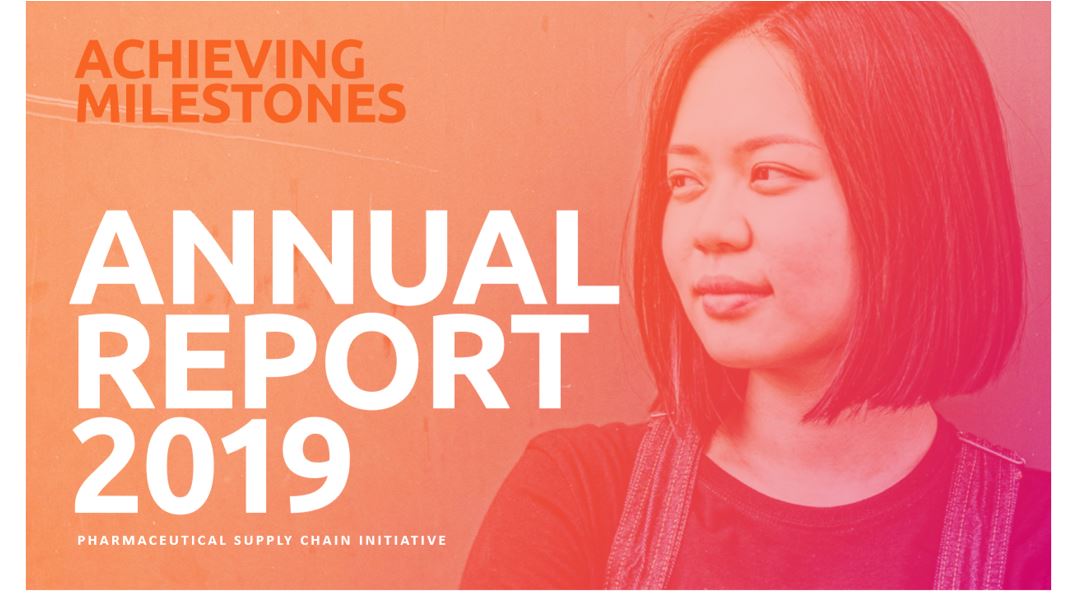
We are very pleased to announce that the PSCI 2019 Annual Report is now available, summarising our collective efforts towards responsible supply chains during 2019.
Key developments in 2019 include:
- Growth in membership, with today over 40 member companies.
- Hundreds of audits completed to PSCI standards now available to members on our new community platform The Link, alongside valuable resources, news, and training materials.
- Unprecedented levels of supplier engagement through two large-scale supplier conferences in Hangzhou (China) and Hyderabad (India), reaching 400 supplier delegates.
- New Partnerships Committee focused on intensifying our relationship with our Indian and Chinese partners.
- Expansion of our expert advisory panel, now composed of eight external experts who challenge and advise the Board.
- Measured improvement in PSCI member companies’ public reporting of supply chain data and commitment to PSCI’s Principles.
In 2020, much of business will be operating in a changed environment. It remains to be seen exactly how this will affect the industry and our supply chain practices. Our focus on efficient sharing of audits and virtually-enabled capability building activities is even more important in the wake of Covid-19. Whatever changes arise from this crisis, responsible supply chain practices will be central to our industry’s response.
We welcome comments and encourage you to share this report with your networks.
This resource was published on 24 April 2020
We are proud to launch our online platform specially-developed for the supplier community. The Link is a place for suppliers to connect, engage and to advance their responsible supply chain practices. The attached announcement provides an overview of the platform and details on how to get started.
You can click here to register.
This resource was published on 20 April 2020
This announcement provides more information about our supplier community platform, providing more information on why suppliers should engage.
This resource was published on 19 April 2020
MS Word version
PSCI Self Assessment Questionnaire and Audit Report Template for Core Suppliers, External Manufacturers, Component and Material Suppliers
More Info…
Update History
Version 5, February 2019
Chinese translation added July 2019.
Japanese translation added April 2020.
Remote audit options added November 2020.
Since 20 April 2022, the Word versions of the templates (Full, Abbreviated, CAPR) have been removed completely following a consultation process and notice period. Access to these is only be possible in exceptional circumstances and by contacting the PSCI Secretariat. Please use the Excel versions: Full, Abbreviated, CAPR
-
Ethics
-
Human Rights & Labor
-
Health & Safety
-
Environment
-
Management Systems
-
Audit Program
This resource was published on 27 March 2020
On behalf of the Board and Communications Committee and with thanks to the Pharmaceuticals in the Environment (PiE)/ Anti-Microbial Resistance (AMR) sub-team for their expert input, we are sharing the recently adopted PSCI Position Statement on PiE & AMR. It has been written to highlight the relevance of the PiE issue along the supply chain, to articulate PSCI's position on this high profile topic, and to help answer stakeholder inquiries. It includes an overview of all PSCI resources on PiE and AMR-related issues.
-
Pharmaceuticals In The Environment
-
Anti-Microbial Resistance
This resource was published on 25 March 2020
This document can be used by suppliers to document agreed corrective actions, the type of finding(e.g. Critical-Other, Critical-Major/Minor), the time period for completion, the type of verification (e.g. desk top review of documents or follow up visit), the responsible individual at the supplier for the individual corrective actions, details on the implemented corrective action and a status assignment (open/closed).
Since 20 April 2022, the Word versions of the templates (Full, Abbreviated, CAPR) have been removed completely following a consultation process and notice period. Access to these is only be possible in exceptional circumstances and by contacting the PSCI Secretariat. Please use the Excel versions: Full, Abbreviated, CAPR
This resource was published on 24 March 2020
This document can be used by suppliers to document agreed corrective actions, the type of finding(e.g. Critical/Major/Minor), the time period for completion, the type of verification (e.g. desk top review of documents or follow up visit), the responsible individual at the supplier for the individual corrective actions, details on the implemented corrective action and a status assignment (open/closed).
Content version v4.0, March 2020
Content version v5.0, December 2021
This resource was published on 16 January 2020
The compiled slide deck from the PIE/AMR Deep Dive training seminar held on 17th September 2019 in Hyderabad, India.
-
Pharmaceuticals In The Environment
-
Anti-Microbial Resistance
This resource was published on 17 December 2019
Our latest newsletter, accessible at the link below, reflects recent activities including our Annual General Meeting, supplier conferences and webinars. It also highlights our upcoming plans, and external developments relevant to pharmaceutical supply chains.
This resource was published on 17 December 2019
Please find the global dial-in numbers in the attached PDF.
We are looking forward to speaking with you.
This resource was published on 12 December 2019
Presentation Pack from the 2019 PSCI Auditor Training, 26-27 September in Hangzhou, China.
You can also find the recap video here.
Please find the links below to the training slides of both days.
This resource was published on 28 October 2019
This webinar initially aired on Thursday 24th October 2019.
In this webinar we explored what is meant by modern slavery, where it is found in the world and how it can be addressed in the pharma supply chain.
Our speaker covered the evolving legislative landscape for modern slavery as it relates to pharma, how to identify risks and case study examples of how to address them.
We were delighted to be joined by the following speaker:
- Peter Nestor, Human Rights Manager at Novartis
You can access the slide deck here.
-
Human Rights & Labor
-
Freely Chosen Employment
-
Wages, Benefits & Working Hours
This resource was published on 28 October 2019
This webinar initially aired on Thursday 24th October 2019.
In this webinar we explored what is meant by modern slavery, where it is found in the world and how it can be addressed in the pharma supply chain.
Our speaker covered the evolving legislative landscape for modern slavery as it relates to pharma, how to identify risks and case study examples of how to address them.
We were delighted to be joined by the following speaker:
- Peter Nestor, Human Rights Manager at Novartis
You can watch the recording here.
Finally, we want your views! We're encouraging all suppliers to take this short survey to help the PSCI understand the impact it has on suppliers.
-
Human Rights & Labor
-
Freely Chosen Employment
-
Wages, Benefits & Working Hours
This resource was published on 27 August 2019
Graphic of PSCI SDG mapping. We recently mapped PSCI Principles and activities against the UN's Sustainable Development Goals. It was an interesting exercise, revealing where our missions align. We plan to build on this by applying the SDG framework in ongoing and future workstreams.
Click below to download the full graphic:
This resource was published on 1 August 2019
Introduction presentation for PSCI audit opening meeting.
Version 1 - 07/02/2017
Version 2 - 01/08/2019
Version 3 - 15/04/2020
Version 4 - 31/08/2020
Version 5 - 31/08/2021
Version 6 - 20/12/2021
This resource was published on 1 August 2019
Agenda for the 2019 Supplier Conference held in Hyderabad, India.
This resource was published on 23 July 2019
This webinar initially aired on 18th July 2019
In this webinar we will be looking at the impact of pharmaceutical manufacturing on antimicrobial resistance, as well as demonstrating PSCI's PEC:PNEC calculator tool.
Our speakers will be covering the issues associated with antimicrobial drugs in wastewater, targets for environmental risk assessment of antimicrobial drugs, and how to assess the risk of antimicrobial drugs in wastewater.
We are delighted to be joined by the following speakers:
- Daniel Caldwell, Global Director, Environmental and Occupational Toxicology at Johnson & Johnson;
- Neil Parke, Global HSE Consultant at Lilly.
The recording is available here.
Finally, we want your views! We're encouraging all suppliers to take this short survey to help the PSCI understand the impact it has on suppliers.
-
Pharmaceuticals In The Environment
-
Anti-Microbial Resistance
This resource was published on 23 July 2019
This webinar initially aired on 18th July 2019
In this webinar we will be looking at the impact of pharmaceutical manufacturing on antimicrobial resistance, as well as demonstrating PSCI's PEC:PNEC calculator tool.
Our speakers will be covering the issues associated with antimicrobial drugs in wastewater, targets for environmental risk assessment of antimicrobial drugs, and how to assess the risk of antimicrobial drugs in wastewater.
We are delighted to be joined by the following speakers:
- Daniel Caldwell, Global Director, Environmental and Occupational Toxicology at Johnson & Johnson;
- Neil Parke, Global HSE Consultant at Lilly.
-
Pharmaceuticals In The Environment
-
Anti-Microbial Resistance
This resource was published on 22 July 2019
Agenda for the 2019 Supplier Conference held in Hangzhou, China.
This resource was published on 5 July 2019
This presentation summarises who we are as PSCI and includes an overview of:
- The PSCI's mission, vision, and value proposition
- Board & Governance
- The PSCI Principles
- Strategic Pillars - Audit | Capability | Projects
- Topic and Regional Teams
- Supplier Partnership
Latest version: January 2026
This resource was published on 4 July 2019
This document gives a summary of the PSCI Audit Program and process and answers frequently asked questions including:
- Why do we audit?
- What are "Shared" Audits?
- Who benefits from Shared Audits?
- Initiating a PSCI Audit
- What happens in a PSCI Audit?
- Who carries out the audit?
Last updated November 2025
This resource was published on 28 June 2019
-
Emergency Preparedness & Response
This resource was published on 28 June 2019
-
Emergency Preparedness & Response